



Old Mine Cut Diamond Engagement Rings
Wear Your History
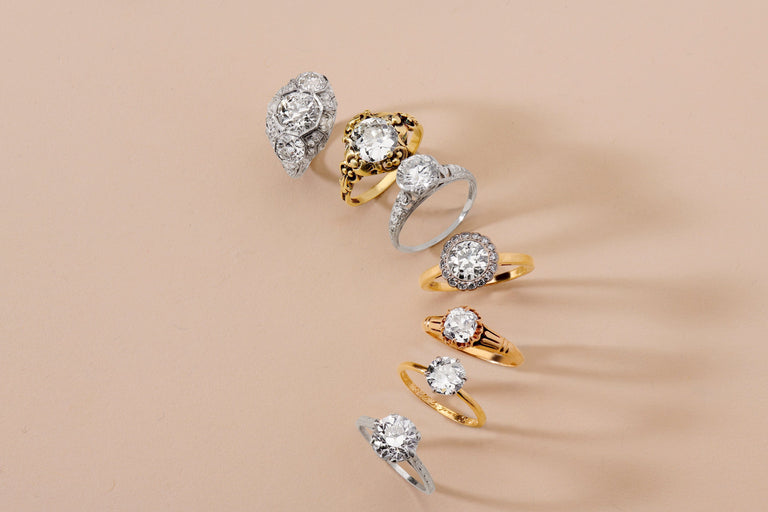
The old mine cut diamond emerged during the Georgian era between 1714 to 1837, capturing the imaginations of diamond connoisseurs with its unique sparkle. However, it truly rose to prominence during the Victorian Era starting in the 1840s. This was the first diamond cut that exhibited stunning brightness regardless of lighting conditions, making it a perfect companion for both daylight and the soft glow of candlelight that illuminated evenings before the invention of electricity.
Further Notes on Old Mine Cut Diamonds
What Defines an Old Mine Cut Diamond?
Old mine cut diamonds are among the earliest brilliant style cuts, developed in the 18th and 19th centuries before the standardization of modern round brilliant proportions. They are recognized by a high crown, smaller table, deeper pavilion, and open culet. The outline is often softly squared or slightly rectangular, giving each old mine cut diamond a distinct presence.
Old Mine Cut vs. Old European Cut
Old mine cut engagement rings predate old European cuts and generally feature a more cushion like outline. Old European cut diamonds evolved toward a rounder silhouette with a slightly more symmetrical facet arrangement. While both are antique cutting styles, old mine cuts typically display earlier proportions and a chunkier geometry.
Our Approach to Old Mine Cut Engagement Rings
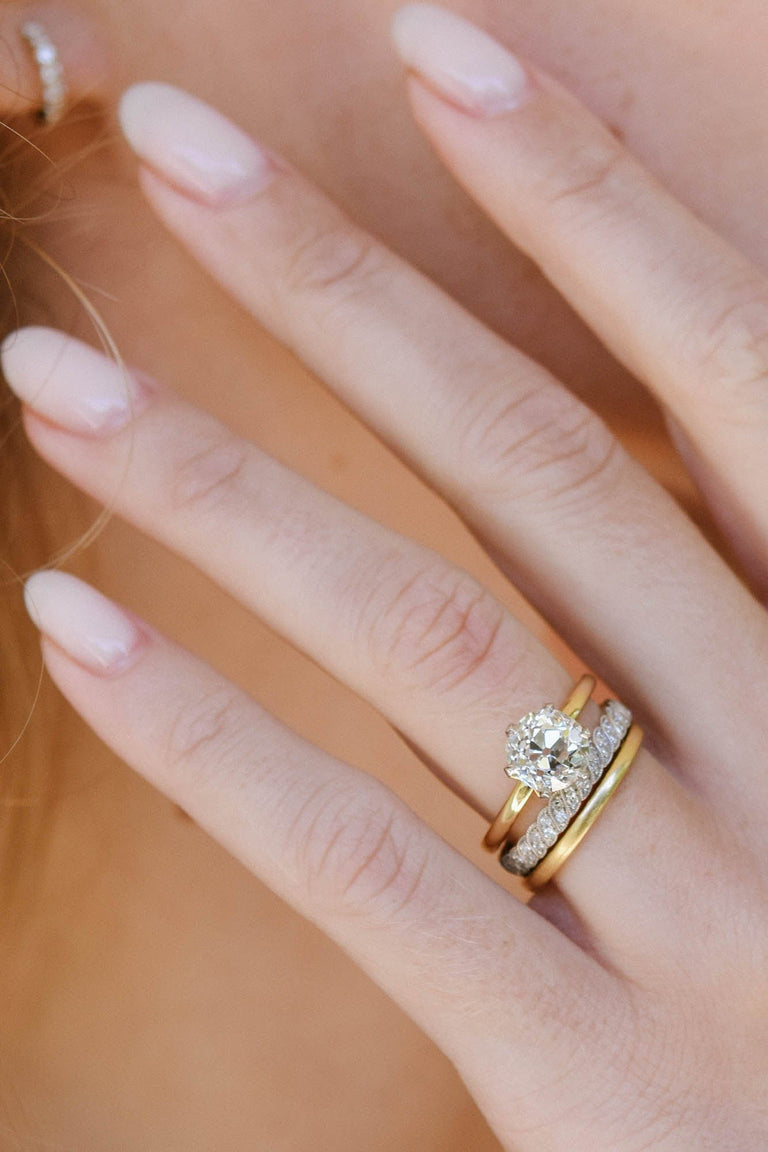
Each old mine cut diamond engagement ring in our collection is curated for proportion, light performance, and character. Whether preserved in its original antique mounting or set in a By Erstwhile design, every ring highlights the individuality that defines hand-cut antique diamonds. Because no two old mine diamonds are alike, working with an expert can help guide you in selecting the one that best suits you.